


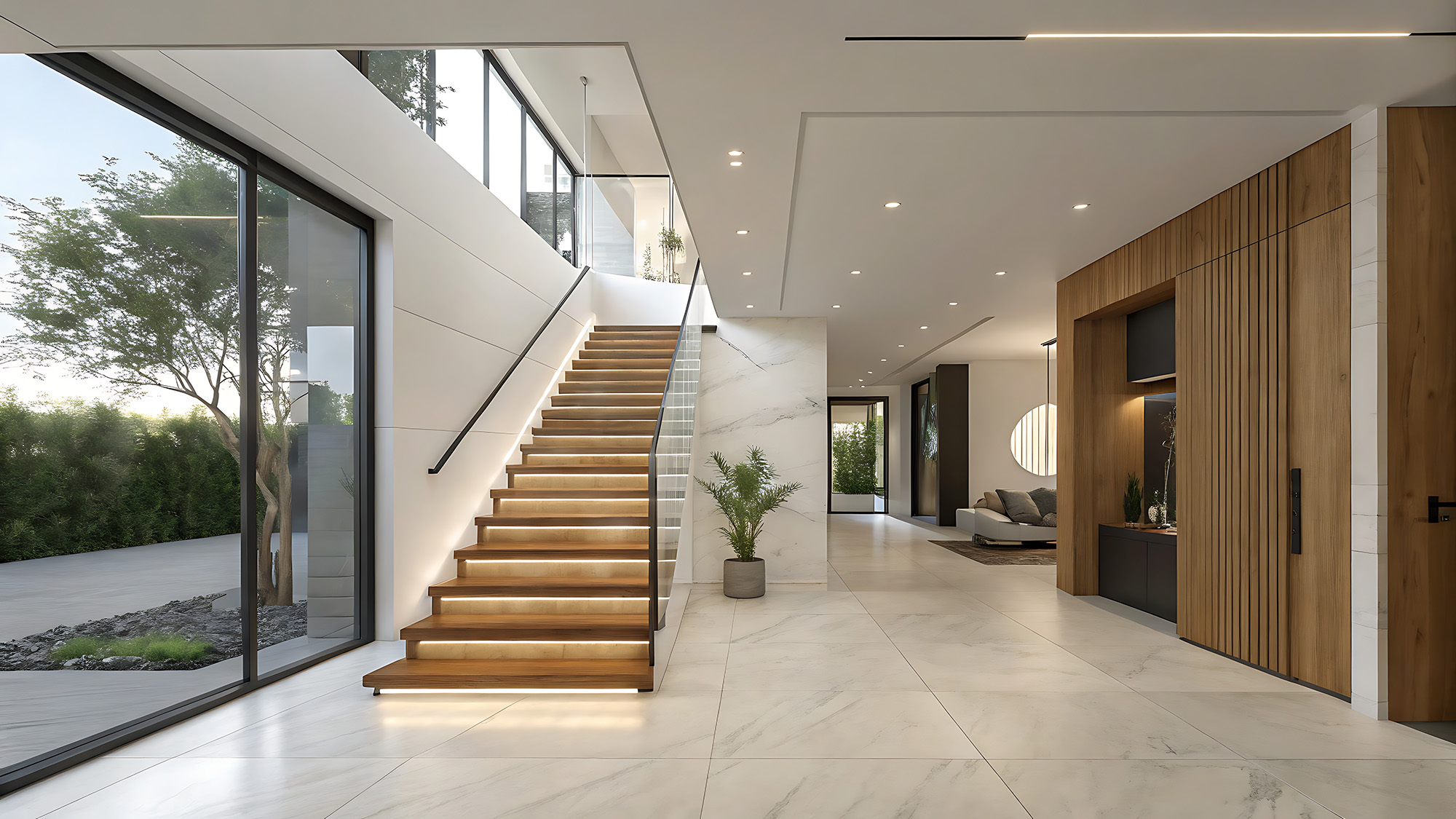
Three season rooms sit in a strange middle ground. They are enclosed like the rest of the house, but they are rarely on the same heating and cooling system, and the amount of glass involved means they see far more direct sunlight and temperature swing over the course of a day than a typical interior room in Arnold. That combination changes what actually performs well underfoot, and ceramic tile has some real advantages here that do not get talked about as often as they should.
Sunlight exposure affects flooring more in this room than anywhere else
A three season room with a wall of windows or sliding doors gets hours of direct sun that most rooms in a house never experience. Some flooring materials fade or discolor with this kind of prolonged UV exposure over time. Ceramic tile is essentially immune to it, since the color is fired into the glaze itself rather than sitting on the surface as a coating, so a tile floor in a sun drenched three season room looks the same in year five as it did on day one.
This becomes a bigger factor the more glass a room has. A three season room with floor to ceiling windows on two or three sides is a genuinely different environment than a single window in a den, and the flooring choice should reflect that difference rather than being picked the same way you would for an interior room.
The slab underneath often behaves differently than the rest of the house
Many three season rooms are built on a slab that was poured separately from the main house foundation, and that slab can expand and contract with outdoor temperature swings more than the conditioned areas of a home. For larger tile installations in a room like this, it is worth talking with your installer about whether movement joints are needed in the tile layout to accommodate that slab movement, something that rarely comes up in a typical interior tile installation where the subfloor stays in a stable, conditioned environment year round.
This is not a reason to avoid tile in a three season room, it is simply a planning detail that a lot of general flooring content skips over, and getting it right at installation avoids cracking issues down the road that would otherwise be blamed on the tile itself rather than the slab underneath it.
Condensation is more common here than in the rest of the home
The temperature difference between a three season room and the outdoors, especially in the shoulder months of spring and fall, can lead to more condensation forming on and near the floor than you would see in a fully conditioned room. Ceramic tile handles this well since it does not absorb moisture the way some other flooring materials can, and porcelain tile in particular, with its very low water absorption rate, is worth considering if the room tends to see more humidity swings than the rest of the house.
Vinyl plank is another material that holds up fine against this kind of moisture, and some homeowners choose it in a three season room for a warmer feel underfoot. Tile still tends to have the edge when UV exposure and slab movement are both major factors in the room, which is often the case in a space built mostly of glass.
If you are finishing out a three season room in Arnold and want a flooring choice built for the sun exposure and temperature swings that come with it, Carpet Village can walk you through the right ceramic tile options for your space. We serve Pasadena, Arnold, Severna Park, Millersville, Severn, Glen Burnie, Ferndale and Linthicum Heights, MD. and can help you plan the layout with your slab and sun exposure in mind. Stop by Pasadena, MD to see tile samples in person, or contact us to talk through your project.
Browse our ceramic tile flooring selection to see what fits your space.


