


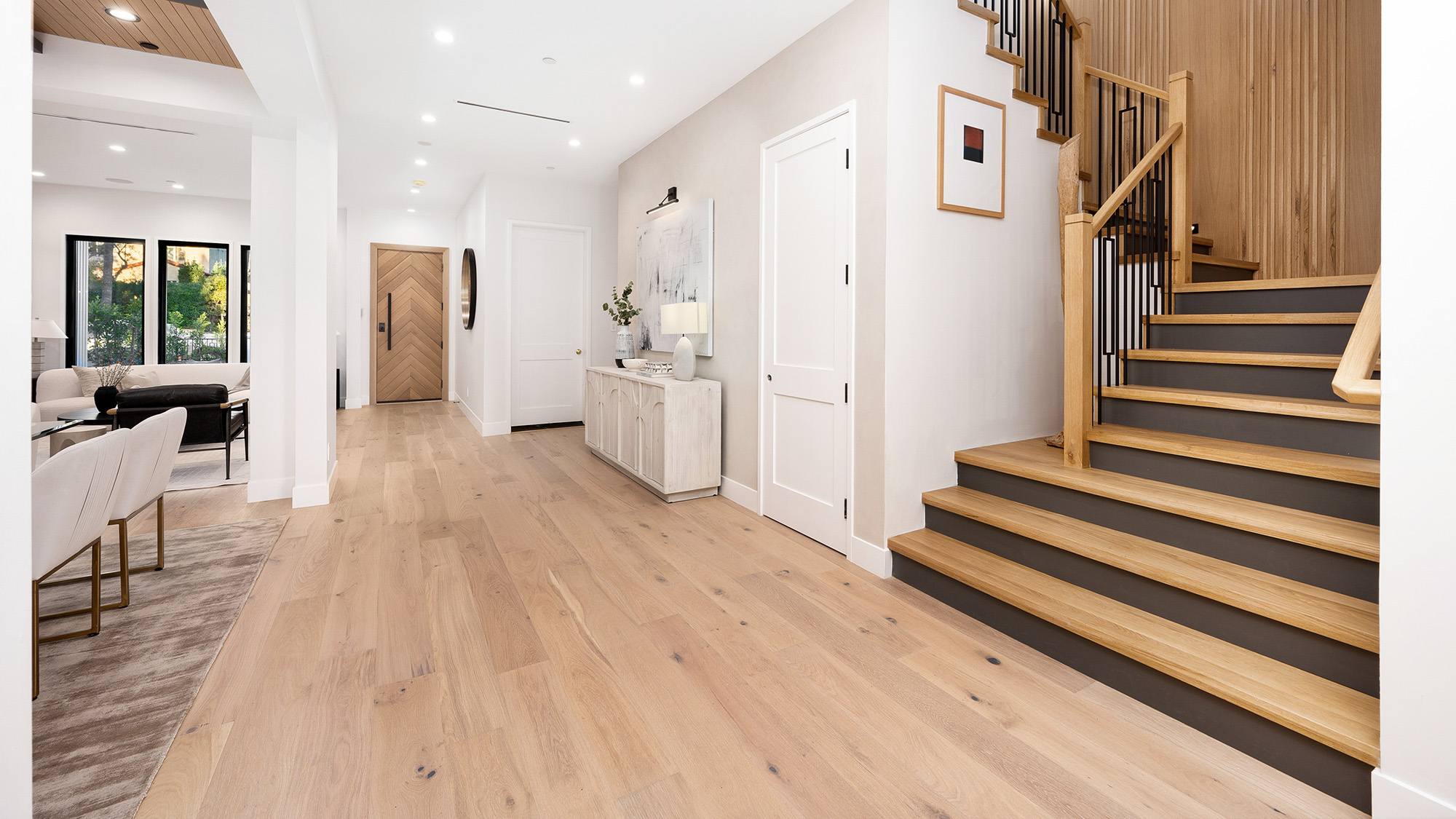
Building an addition onto a Millersville home raises a question that sounds simple and is not. You have hardwood in the existing house, you want hardwood in the new space, and you would like the two to look like one floor. Ordering the same species seems like it should handle it. In practice the new wood almost never matches on arrival, and understanding why saves a lot of frustration at the planning stage.
The good news is that the gap is usually closeable. It just takes a different approach than picking a product off a display and hoping.
Your existing floor has been changing color for years
Hardwood oxidizes and shifts tone with age and light exposure. Red oak ambers, cherry darkens considerably, and even a stained floor changes as the finish above it ages. The floor in your existing rooms has had years or decades of that process, while new material of the same species starts at its original color. Placing the two side by side at the threshold makes the difference obvious even when the species, cut, and stain are identical on paper.
This is the single biggest reason a same species order disappoints people. It is not a manufacturing inconsistency, it is simply that one floor has aged and the other has not. The new wood will eventually catch up, though that process takes years and happens unevenly depending on how much daylight each room gets, which is rarely the same between an original room and an addition with new windows.
Sanding both floors together is the reliable route
The approach that actually produces a seamless result is installing the new hardwood unfinished or ready to sand, then sanding and finishing both the new and existing floors together as one job. That levels the color difference, puts the same stain and finish across both, and removes the aging gap in one pass. It also lets the installer feather the transition at the doorway rather than relying on a transition strip to hide a mismatch.
This does mean the existing floor gets refinished as part of the addition project, which is worth factoring into the schedule and the scope early rather than treating it as an afterthought. If the existing floor is engineered with a thin veneer, or has already been sanded several times, it may not have enough material left to take another pass, which changes the plan and is worth confirming before committing to a match.
Plank width, cut, and species have all moved on
Flooring that went into Anne Arundel County homes decades ago often used narrow strip widths that are less common now, while wider planks have become the standard on most showroom floors. If your existing floor is a narrow strip and the new material is significantly wider, the two will read as different floors even with a perfect color match, because the line spacing across the room is visually different.
The cut matters as well. Plainsawn, riftsawn, and quartersawn boards of the same species show noticeably different grain patterns, and older floors sometimes used a cut that is less commonly stocked today. Red oak and white oak are another common trap, since they look similar in a photo but take stain differently and have different grain character in person. Bringing a sample board from the existing floor, usually from a closet or under a vent, gives a showroom something real to match against rather than a description.
Sometimes a deliberate break reads better than a near miss
If a true match is not achievable, whether because of material availability or the condition of the existing floor, a clean intentional transition often looks better than a match that is close but visibly off. A threshold, a border detail, or a change of direction at the doorway reads as a design decision rather than a mistake, and it gives the addition its own identity.
This is also where other flooring options genuinely earn a look. Plenty of additions use a different material altogether in a new sunroom, office, or family room, and a deliberate change at the doorway is a perfectly good answer when matching the original floor is not realistic.
If you are planning an addition in Millersville and want the new flooring to work with what is already there, Carpet Village can help you assess the existing floor and plan the match before anything is ordered. We serve Pasadena, Arnold, Severna Park, Millersville, Severn, Glen Burnie, Ferndale and Linthicum Heights, MD. and handle both hardwood supply and refinishing, which is usually what a true match requires. Bring a sample board to Pasadena, MD, or contact us to arrange a look at your existing floor.
Browse our hardwood flooring selection and our hardwood sanding and finishing services to see how the two work together on an addition.


