


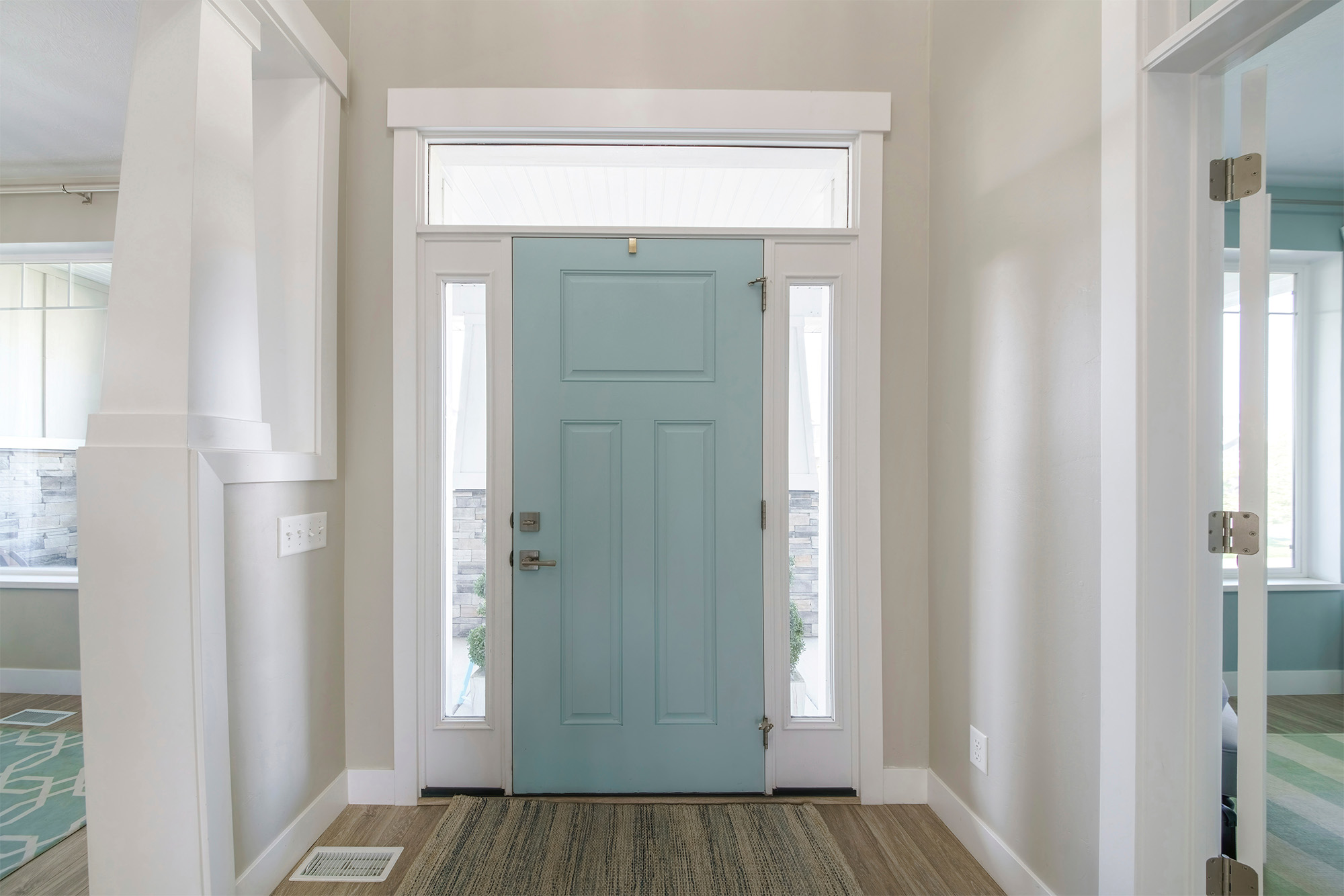
Every home has one floor that absorbs the most punishment before anything reaches the rest of the house, and for most homeowners that is the entryway or mudroom. Dirt, grit, road salt in the winter, wet shoes, and pet paws all land here first, which makes the flooring choice in this specific space more about performance than any other room.
Ceramic tile and durable waterproof vinyl plank both hold up well in this role, and the right pick usually comes down to a few practical differences rather than one being simply better than the other.
Consider what the space connects to
An entryway or mudroom that leads directly from a garage, a side yard, or a dog run tends to deal with more grit and moisture tracked in on a daily basis. Ceramic tile handles this kind of repeated exposure well since it is fully impervious to water and will not absorb spills or melted snow, and it tends to be very easy to sweep and mop clean of the kind of debris that gets tracked in from outside.
A front entryway that connects more directly into a living space, where the flooring ideally transitions smoothly into an adjoining room, is often a better fit for a waterproof vinyl plank like the Liberty Home Big City collection, since it can visually flow into hardwood look flooring used elsewhere in the home while still standing up to wet shoes and heavy foot traffic near the front door.
Comfort underfoot is a real factor here too
Ceramic tile is a hard, cold surface, which some homeowners do not mind in a strictly functional mudroom but which can feel less comfortable in a front entryway where people are standing to take off shoes or hang coats. It is also less forgiving if something is accidentally dropped, since ceramic does not have any give to it.
Vinyl plank has a bit more cushion underfoot and a warmer feel than tile, especially with an attached underlayment, which some households prefer in an entry space that gets used constantly throughout the day. Neither trait makes one material wrong for the job, it is really a matter of what feels right for how the specific entryway gets used day to day.
Installation details matter more than they seem
Both materials perform well in entryways when installed correctly, but the details differ. Ceramic tile relies on properly sealed grout lines to stay fully water resistant over time, and that grout does need occasional resealing to keep performing the way it did on day one. Waterproof vinyl plank with tightly locking edges, like the UltraDefend line, is designed to resist water intrusion at the seams without that same ongoing maintenance step, which some homeowners find more convenient for a high traffic zone.
Subfloor condition also plays a bigger role in an entryway than people expect, since this is often an area with a slab, an addition, or a transition point between different subfloor types. Getting that evaluated before choosing between tile and vinyl plank helps avoid installation issues down the road, regardless of which material ends up being the better fit.
If you are updating a mudroom or entryway and are not sure whether ceramic tile or a waterproof vinyl plank makes more sense for your space, Carpet Village can help you compare both in person. We serve @@service-areas@@ and carry a range of entryway ready flooring built to handle daily wear from the door in. Visit @@all-showrooms@@ to see samples up close, or contact us to talk through what would work best for your entryway.
Take a look at our vinyl plank flooring options built for high traffic spaces like this one, or browse our ceramic tile selection if that's the better fit for your entryway.


